.NET Core 3.0 launches at .NET Conf for Free

.NET Core 3.0 launches at .NET Conf


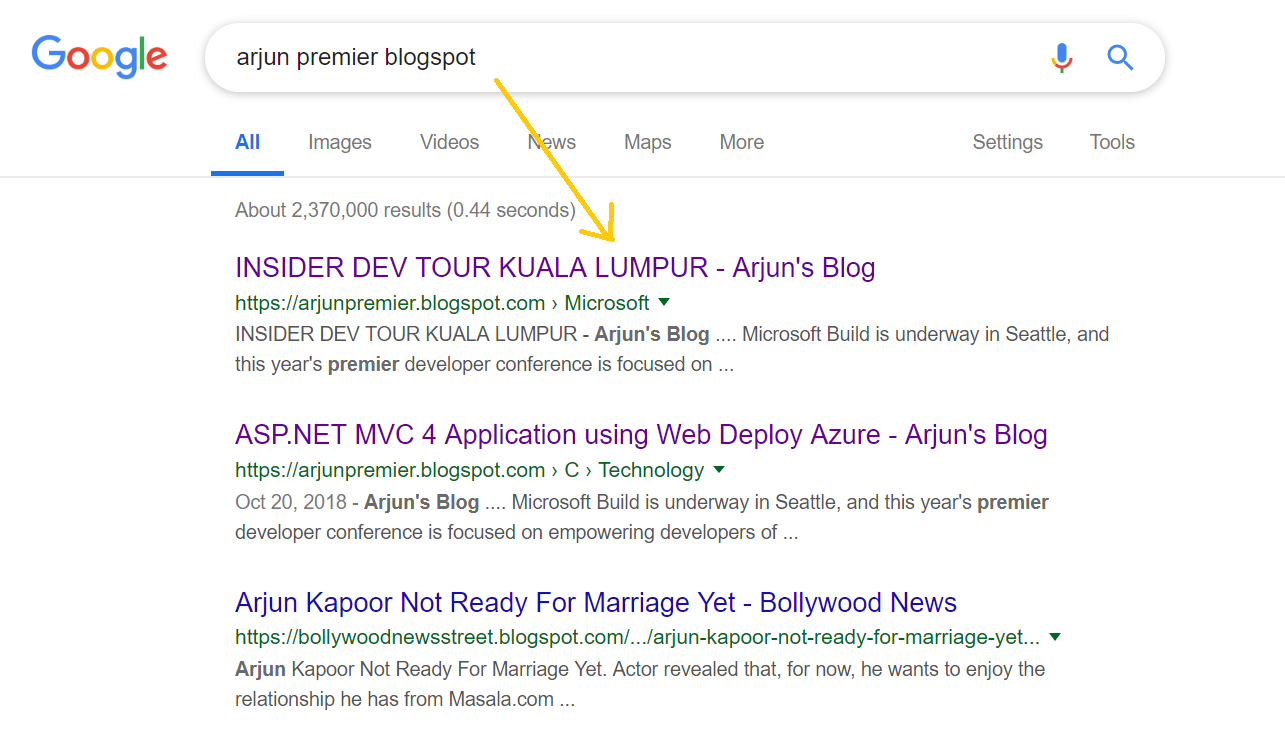
Join the .NET Conf 2019 free virtual event September 23-25 to learn about the newest developments across the.NET platform, open source, and development tools. Mark your calendar!


NET Conf is a FREE, 3 day virtual developer event co-organized by the .NET community and Microsoft. This year.NET Core 3.0 will launch at .NET Conf 2019! Come celebrate and learn about the new release. You won’t want to miss this one.

When :  September 23 — 25, 2019

NET Conf provides a wide selection of live sessions streaming here that feature speakers from the community and .NET product teams. It’s a chance to learn, ask questions live, and get inspired for your next software project.

You will learn to build for web, mobile, desktop, games, services, libraries and more for a variety of platforms and devices all with .NET. We have sessions for everyone, no matter if you are just beginning or are a seasoned engineer.

We’ll have presentations on .NET Core and ASP.NET Core, C#, F#, Azure, Visual Studio, Xamarin, and much more.


Reference : 

https://www.dotnetconf.net/?utm_source=dotnet&utm_medium=banner&utm_campaign=savedate

A cancer patient threw money in Harbin provincial hospital

A cancer patient threw money in Harbin provincial hospital

This picture was taken in the Harbin Provincial Hospital. A cancer patient carrying a bag full of money asked the doctor to save her life and she has plenty of money to pay him. She was so angry and frustrated that she threw the money across the hospital’s entire corridor, literally shouting loudly “What’s the use of having money”, “What the use of having money” , “Money cannot buy health and life”. 

It reminds us the great sense as we have “Money and Time” to stay healthy.  Its time to be sensible and realize we human being are “Mortal (of a living human being, often in contrast to a divine being subject to death).” and not a “Immortal” (living forever; never dying or decaying..)  In life money plays a vital role but that isn’t the ultimate.

As we get into the corporate world, constant reminder necessary of ourselves and reconciliation will help to re-unite with nature with flawless connectivity to universe. Pay attention fully to your inner body.


 Stay Healthy….                 Accept Challenge  ……                  Achieve More …….


The 5 AM Club by Robin Sharma

Legendary leadership and elite performance expert Robin Sharma introduced The 5am Club concept over twenty years ago, based on a revolutionary morning routine that has helped his clients maximize their productivity, activate their best health and bulletproof their serenity in this age of overwhelming complexity. Now, in this life-changing book, handcrafted by the author over a rigorous four-year period, you will discover the early-rising habit that has helped so many accomplish epic results while upgrading their happiness, helpfulness and feelings of aliveness.

 the-5-am-club

Introducing .NET 5

Introducing .NET 5


Today, Microsoft announcing that the next release after .NET Core 3.0 will be .NET 5. This will be the next big release in the .NET family.
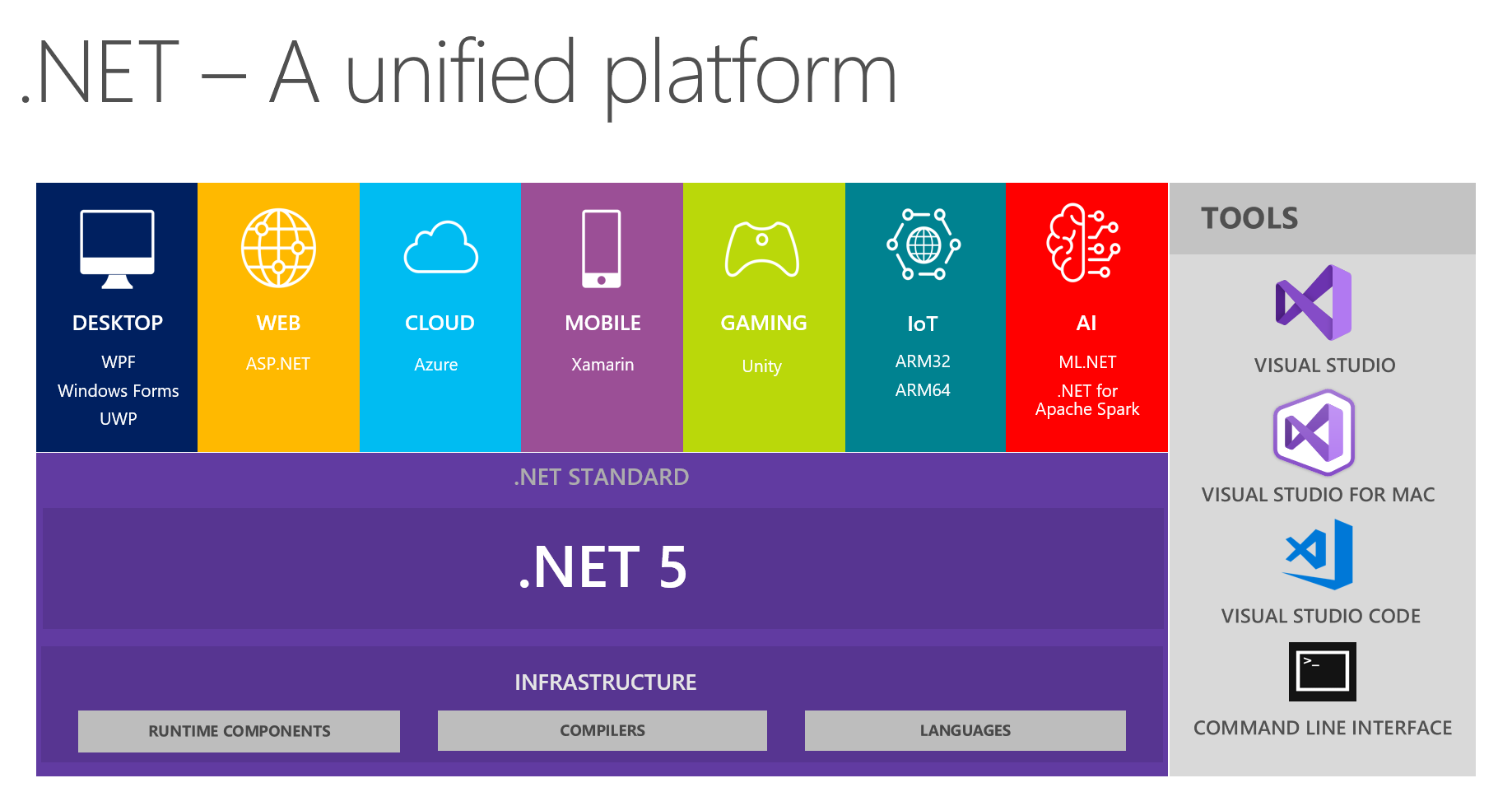
There will be just one .NET going forward, and you will be able to use it to target Windows, Linux, macOS, iOS, Android, tvOS, watchOS and WebAssembly and more.
They will introduce new .NET APIs, runtime capabilities and language features as part of .NET 5.
From the inception of the .NET Core project, we’ve added around fifty thousand .NET Framework APIs to the platform. .NET Core 3.0 closes much of the remaining capability gap with .NET Framework 4.8, enabling Windows Forms, WPF and Entity Framework 6. .NET 5 builds on this work, taking .NET Core and the best of Mono to create a single platform that you can use for all your modern .NET code.
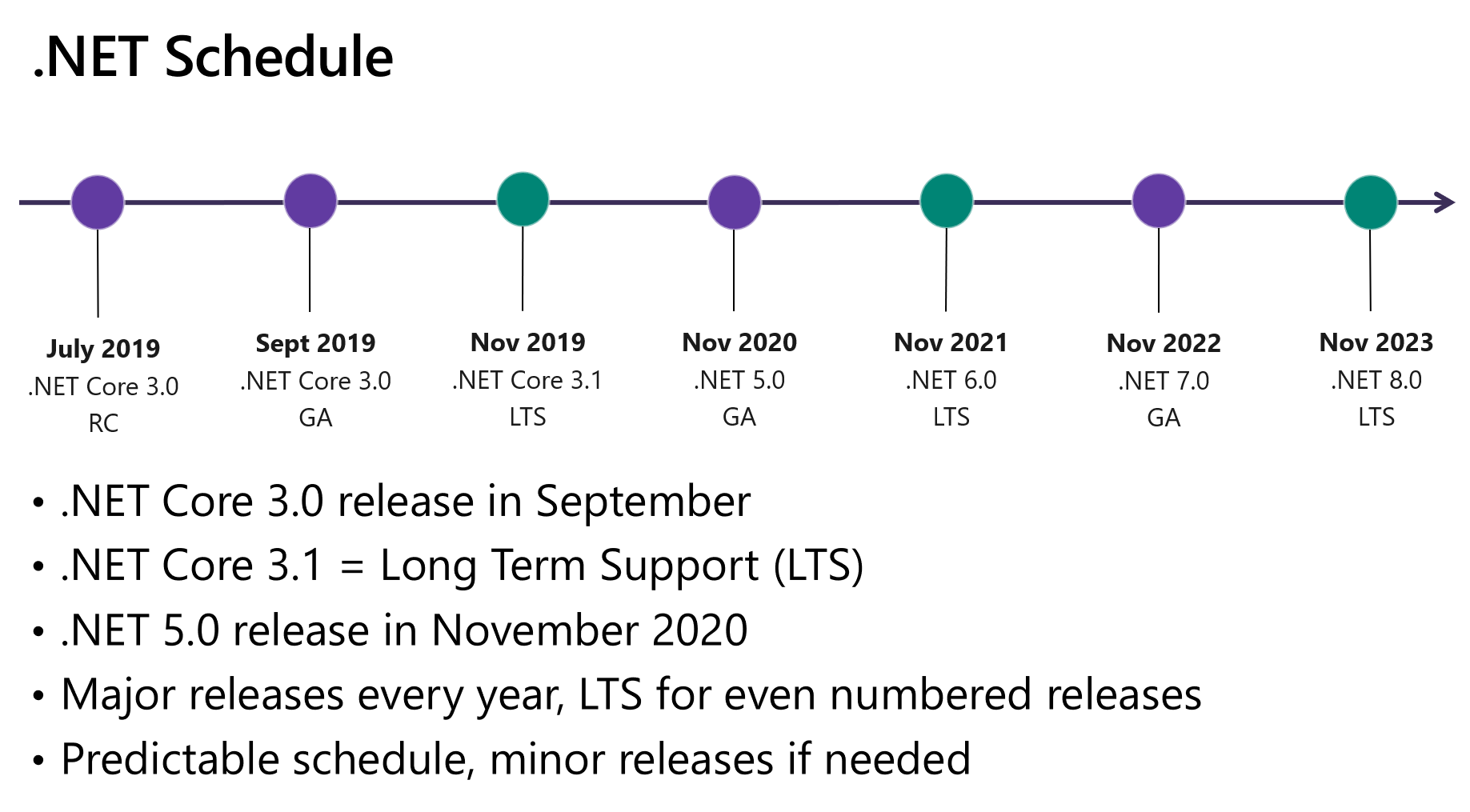
We intend to release .NET 5 in November 2020, with the first preview available in the first half of 2020. It will be supported with future updates to Visual Studio 2019, Visual Studio for Mac and Visual Studio Code.
Check out .NET Core is the Future of .NET to understand how .NET 5 relates to .NET Framework.

.NET 5 = .NET Core vs Next

.NET 5 is the next step forward with .NET Core. The project aims to improve .NET in a few key ways:
  • Produce a single .NET runtime and framework that can be used everywhere and that has uniform runtime behaviors and developer experiences.
  • Expand the capabilities of .NET by taking the best of .NET Core, .NET Framework, Xamarin and Mono.
  • Build that product out of a single code-base that developers (Microsoft and the community) can work on and expand together and that improves all scenarios.
This new project and direction are a game-changer for .NET. With .NET 5, your code and project files will look and feel the same no matter which type of app you’re building. You’ll have access to the same runtime, API and language capabilities with each app. This includes new performance improvements that get committed to corefx, practically daily.
Everything you love about .NET Core will continue to exist:
  • Open source and community-oriented on GitHub.
  • Cross-platform implementation.
  • Support for leveraging platform-specific capabilities, such as Windows Forms and WPF on Windows and the native bindings to each native platform from Xamarin.
  • High performance.
  • Side-by-side installation.
  • Small project files (SDK-style).
  • Capable command-line interface (CLI).
  • Visual Studio, Visual Studio for Mac, and Visual Studio Code integration.
Here’s what will be new:
  • You will have more choice on runtime experiences (more on that below).
  • Java interoperability will be available on all platforms.
  • Objective-C and Swift interoperability will be supported on multiple operating systems.
  • CoreFX will be extended to support static compilation of .NET (ahead-of-time – AOT), smaller footprints and support for more operating systems.
We will ship .NET Core 3.0 this September, .NET 5 in November 2020, and then we intend to ship a major version of .NET once a year, every November:
We’re skipping the version 4 because it would confuse users that are familiar with the .NET Framework, which has been using the 4.x series for a long time. Additionally, we wanted to clearly communicate that .NET 5 is the future for the .NET platform.
We are also taking the opportunity to simplify naming. We thought that if there is only one .NET going forward, we don’t need a clarifying term like “Core”. The shorter name is a simplification and also communicates that .NET 5 has uniform capabilities and behaviors. Feel free to continue to use the “.NET Core” name if you prefer it.

Runtime experiences

Mono is the original cross-platform implementation of .NET. It started out as an open-source alternative to .NET Framework and transitioned to targeting mobile devices as iOS and Android devices became popular. Mono is the runtime used as part of Xamarin.
CoreCLR is the runtime used as part of .NET Core. It has been primarily targeted at supporting cloud applications, including the largest services at Microsoft, and now is also being used for Windows desktop, IoT and machine learning applications.
Taken together, the .NET Core and Mono runtimes have a lot of similarities (they are both .NET runtimes after all) but also valuable unique capabilities. It makes sense to make it possible to pick the runtime experience you want. We’re in the process of making CoreCLR and Mono drop-in replacements for one another. We will make it as simple as a build switch to choose between the different runtime options.
The following sections describe the primary pivots we are planning for .NET 5. They provide a clear view on how we plan to evolve the two runtimes individually, and also together.

High throughput and high productivity

From the very beginning, .NET has relied on a just-in-time compiler (JIT) to translate Intermediate Language (IL) code to optimized machine code. Since that time, we’ve built an industry-leading JIT-based managed runtime that is capable of very high throughput and also enabled developer experiences that make programming fast and easy.
JITs are well suited for long-running cloud and client scenarios. They are able to generate code that targets a specific machine configuration, including specific CPU instructions. A JIT can also re-generate methods at runtime, a technique used to JIT quickly while still having the option to produce a highly-tuned version of the code if this becomes a frequently used method.
Our efforts to make ASP.NET Core run faster on the TechEmpower benchmarks is a good example of the power of JIT and our investments in CoreCLR. Our efforts to harden .NET Core for containers also demonstrates the runtime’s ability to dynamically adapt to constrained environments.
Developer tools are another good example where JIT shines, such as with the dotnet watch tool or edit and continue. Tools often require compiling and loading code multiple times in a single process without restarting and need to do it very quickly.
Developers using .NET Core or .NET Framework have primarily relied on JIT. As a result, this experience should seem familiar.
The default experience for most .NET 5 workloads will be using the JIT-based CoreCLR runtime. The two notable exceptions are iOS and client-side Blazor (web assembly) since both require ahead-of-time (AOT) native compilation.

Fast startup, low footprint, and lower memory usage

The Mono Project has spent much of its effort focused on mobile and gaming consoles. A key capability and outcome of that project is an AOT compiler for .NET, based on the industry-leading LLVM compiler project. The Mono AOT compiler enables .NET code to be built into a single native code executable that can run on a machine, much like C++ code. AOT-compiled apps can run efficiently in small places, and trades throughput for startup if needed.
The Blazor project is already using the Mono AOT. It will be one of the first projects to transition to .NET 5. We are using it as one of the scenarios to prove out this plan.
There are two types of AOT solutions:
  • solutions that require 100% AOT compilation.
  • solutions where most code is AOT-compiled but where a JIT or interpreter is available and used for code patterns that are not friendly to AOT (like generics).
The Mono AOT supports both cases. The first type of AOT is required by Apple for iOS and some game consoles, typically for security reasons. The second is the preferred choice since it offers the benefits of AOT without any of its drawbacks.
.NET Native is the AOT compiler we use for Windows UWP applications and is an example of the first type of AOT listed above. With that particular implementation, we limited the .NET APIs and capabilities that you can use. We learned from that experience that AOT solutions need to cover the full spectrum of .NET APIs and patterns.
AOT compilation will remain required for iOS, web assembly and some game consoles. We will make AOT compilation an option for applications that are more appliance-like, that require fast startup and/or low footprint.

Fundamentals and overlapping experiences

It is critical that we continue to move forward as an overall platform with startup, throughput, memory use, reliability, and diagnostics. At the same time, it also makes sense to focus our efforts. We’ll invest more in throughput and reliability in CoreCLR while we invest more in startup and size reduction with the Mono AOT compiler. We think that these are good pairings. Throughput and reliability go together as do startup and size reduction.
While there are some characteristics where it makes sense to make different investments, there are others that do not.
Diagnostics capabilities need to be the same across .NET 5, for both functional and performance diagnostics. It is also important to support the same chips and operating systems (with the exception of iOS and web assembly).
We will continue to optimize .NET 5 for each workload and scenario, for whatever makes sense. There will be even greater emphasis on optimizations, particular where multiple workloads have overlapping needs.
All .NET 5 applications will use the CoreFX framework. We will ensure that CoreFX works well in the places it is not used today, which is primarily the Xamarin and client-side Blazor workloads.
All .NET 5 applications will be buildable with the .NET CLI, ensuring that you have common command-line tooling across projects.
C# will move forward in lock-step with .NET 5. Developers writing .NET 5 apps will have access to the latest C# version and features.

The birth of the project

We met as a technical team in December 2018 in Boston to kick off this project. Design leaders from .NET teams (Mono/Xamarin and .NET Core) and also from Unity presented on various technical capabilities and architectural direction.
We are now moving forward on this project as a single team with one set of deliverables. Since December, we have made a lot of progress on a few projects:
  • Defined a minimal layer that defines the runtime managed code layer, with the goal making >99% of CoreFX common code.
  • MonoVM can now use CoreFX and its class libraries.
  • Run all CoreFX tests on MonoVM using the CoreFX implementation.
  • Run ASP.NET Core 3.0 apps with MonoVM.
  • Run MonoDevelop and then Visual Studio for Mac on CoreCLR.
Moving to a single .NET implementation raises important questions. What will the target framework be? Will NuGet package compatibility rules be the same? Which workloads should be supported out-of-the-box by the .NET 5 SDK? How does writing code for a specific architecture work? Do we still need .NET Standard? We are working through these issues now and will soon be sharing design docs for you to read and give feedback on.

Closing

The .NET 5 project is an important and exciting new direction for .NET. You will see .NET become simpler but also have broader and more expansive capability and utility. All new development and feature capabilities will be part of .NET 5, including new C# versions.
We see a bright future ahead in which you can use the same .NET APIs and languages to target a broad range of application types, operating systems, and chip architectures. It will be easy to make changes to your build configuration to build your applications differently, in Visual Studio, Visual Studio for Mac, Visual Studio Code, Azure DevOps or at the command line.

Solved : not a legal oleaut date

not a legal oleaut date

You have landed this page it means you have solution already ! I get you the direction 

After l lot of finding on the error “not a legal oleaut data”, the root cause is that your some of your transactions or data having invalid year format

 For an Example :  01-01-0018

The red colored year format is the culprit. 


Solution: 

The expected date format should be 01-01-2018, after resetting the date format try to export to excel or reproduce the steps you have been getting the error, should be NO MORE Error.


Search Engine Optimization (SEO) tips for your blog

Help people find your blog on search engines, You can use relevant keywords in the titles and text on your posts and pages. You can also tell search engines which pages, posts, and links to ignore so they won’t show up in search results.

Search Engine Optimization (SEO) tips for your blog

You can use relevant keywords in the titles and text on your posts and pages. You can also tell search engines which pages, posts, and links to ignore so they won’t show up in search results.


Add keywords to your post and page titles

To improve the ranking of your posts and pages in searches, you can:
  • Include keywords that explain what the post or page is about
  • Keep your titles around 60 characters long. A short and concise title will be more readable for users and won’t get cut off.

Add Headers

Tell search engines what your post is about with headers like H1, H2, H3 and more.
  1. Sign in to Blogger.
  2. Click the blog you want to work on.
  3. In the left menu, click Posts.
  4. Choose the post you want to work on and click Edit.
  5. Highlight the text you want to make into a header.
  6. In the menu bar next to “Normal,” click the Down arrow Down Arrow.
  7. Choose the type of heading you want.

Make your images searchable

To make your images searchable, and accessible for visually impaired readers, you can add a short description of the image, or alt text, and a title.
  1. Sign in to Blogger.
  2. Click the blog you want to work on.
  3. Add an image to your post and click it.
  4. Choose Properties.
  5. In the text box, add a long description in “alt” and a short description under “title.”
  6. Click Ok


Hide pages from searches

You can hide pages or posts that you don’t want search engines to find.
  1. Sign in to Blogger.
  2. Click the blog you want to work on.
  3. In the left menu, click Settingsand thenSearch preferences.
  4. Under “Crawlers and Indexing,” next to “Custom robots header tags,” click Edit.
  5. Choose Yes.
  6. Check no index.
  7. Click Save changes.
Tell search engines not to follow certain links
  1. Sign in to Blogger.
  2. Click the blog you want to work on.
  3. In the left menu, click Posts.
  4. Click the post you want to hide.
  5. In the menu bar, click Link.
  6. Select Add ‘rel=nofollow’ attribute.
  7. Click Ok.

As summary, try to add up the following tips to your blog and get more visitors to your blog

How to show website in google ?

How to show website or blogs in google search?

Get your site working on Search Console

Adding your blog to google 
You can add up to 1,000 properties to your account, including both websites and mobile apps. Follow these steps to start using Search Console for your website.
  1. Add your site to Search Console. Be sure to add all variations of your site root URL, including www and non-www versions, and all sub domain variations (example.com, m.example.com, pets.example.com). When you add your site to Search Console, we refer to it as a property. That’s because Search Console supports both websites and apps.
  2. Verify your site. Verification proves that you are the owner of the website. Until you are verified for a website you cannot access any Search Console data for it. Google-hosted sites (such as Blogger or Sites pages) are automatically verified. Verification doesn’t affect Page Rank or affect your site’s performance in Google’s search results.
  3. Specify the www or non-www version of your site as canonical. This applies only to sites that host pages in both www and non-www domains (www.example.com and example.com) and where you are verified for the root domain (example.com, but not pets.example.com or example.com/myblog/).
  4. Add or remove users who can see your data. Add owners and users who can read Search Console data for your site or change Google Search site settings. Note the maximum number of users per property.
  5. Let Google know if you want to target specific countries with your site, or any section of your site.
  6. Read and understand our webmaster guidelines. Be sure that you are following best practices to enable Google to crawl (find) and index (understand) your pages and rank them appropriately, and that you do not violate any of our quality guidelines.
  7. Optionally submit a sitemap and a robots.txt file to help us understand which pages we should and should not crawl on your site.
  8. Learn how to monitor your site and search results in Search Console. If your site is designed well, you won’t have to check your Search Console data often, and in most cases we’ll notify you when we detect a problem.

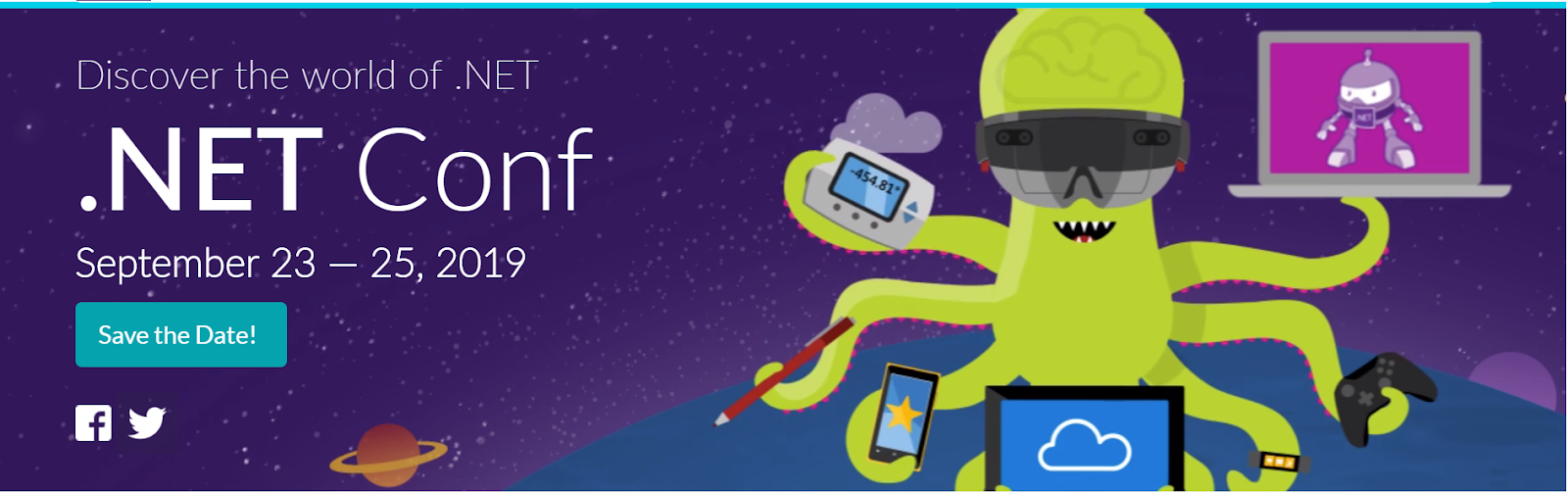
    INSIDER DEV TOUR KUALA LUMPUR

     INSIDER DEV TOUR 

    KUALA LUMPUR

    June 22nd, 2019

    Microsoft Malaysia

    8:00am – 5:00pm

    ABOUT THE EVENTThe Insider Dev Tour is for developers interested in building Microsoft 365 experiences (Windows, Graph, Office,Teams) today, using the latest dev technologies, as well as for those who want a peek into the future. If you canread code, this is for you, regardless if you are a beginner, an expert, a student, or a hobbyist developer.
    The morning keynote session will give you a demo and code-focused overview of the new developer technologyemerging from Redmond. It’s the best of Microsoft Build for Microsoft 365 developers. We’ll cover Windows, Graph,Office, AI, and more so that you are up-to-date and able to make informed decisions when choosing from the latesttechnology for your next project.
    This is a 100 percent developer-focused event.
    The tour is an opportunity to connect directly with leads and engineers from Redmond, as well as regional industryleaders and the community of Microsoft MVPs and RDs. We’re excited to meet you in person! #InsiderDevTour

    LOCATION

    Microsoft Malaysia

    L18, Menara Shell
    No. 211, Jalan Tun Sambanthan
    50470 Kuala Lumpur
    Malaysia

    How our $5B investment in IoT and intelligent edge is accelerating customer, partner and solution innovation

    Image result for internet of things
    694 × 408
    One year ago, we announced our commitment to invest $5B in IoT (Internet of Things) and intelligent edge – technology that is accelerating ubiquitous computing and bringing unparalleled opportunity for transformation across industries. Our commitment is to a build trusted, easy to use platform for our customers and partners to build solutions – no matter where they are starting in their IoT journey.
    Our customers are embracing IoT as a core strategy to drive better business outcomes, improve safety and address social issues – from predicting and preventing equipment failures, optimizing smart buildings for space utilization and energy management and improving patient outcomes and worker safety. From the intelligent cloud to the intelligent edge, this year has been one of tremendous growth – in IoT technology portfolio, partner ecosystem and customer momentum – and we are only just beginning.
    Accelerating customer innovation in IoT from cloud to edge across industries
    What’s truly exciting is seeing our customers achieve real business outcomes with Azure IoT and intelligent edge-based solutions. Our IoT platform is powering customer solutions with thousands of devices, at scale, and the number of devices supported has grown nearly 150 percent year-over-year. This year, many customers such a Starbucks, Chevron, Walmart, Walgreens, BMW, Volkswagen, Toyota Material Handling Group and more are leveraging Azure as their cloud platform with IoT and AI services to accelerate their digital transformation.
    Starbucks is using Azure Sphere to connect select equipment, enabling its partners (employees) more opportunity to engage with customers. This includes everything from beverage consistency, waste reduction, the management of energy consumption and predictive maintenance.
    With Azure and our IoT services, Chevron is connecting a critical piece of equipment – heat exchangers, which manage the heat from fluids flowing through it as part of the plant’s fuel processing – to do predictive maintenance and ultimately prevent unscheduled outages.
    In Walmart’s technology center in Austin, Texas, which is designed accelerate digital innovation, the retail leader is embracing IoT as a way to save energy and prevent product loss. Walmart is using thousands of IoT sensors on HVAC and refrigeration systems that process a billion daily data messages from stores worldwide.
    As part of Microsoft’s partnership with Walgreens Boots Alliance (WBA) to make health care delivery more personal, affordable and accessible for people around the world, WBA will use a portfolio of connected IoT devices for nonacute chronic care management, delivered by Microsoft’s cloud, AI and IoT technologies.
    This week with BMW Group, we announced the Open Manufacturing Platform (OMP), a new technology framework and open community to share smart factory solutions across the automotive and manufacturing sectors to significantly accelerate future industrial IoT developments.
    This year Volkswagen announced a partnership with Microsoft to create the Volkswagen Automotive Cloud with Azure and Azure IoT Edge to create a seamless experience for drivers from the moment they enter, use and leave their vehicles. From 2020 onwards, more than 5 million new Volkswagen brand vehicles per year will be fully connected and will be part of the IoT cloud.
    By infusing solutions with artificial intelligence, mixed reality and the IoT, Toyota Material Handling Group is providing solutions to customers meet the global rise in ecommerce, and move goods quickly, frequently, accurately and safely. With Microsoft technologies, the solutions range from connected forklift and field service systems available today to AI-powered concepts that pave the way for intelligent automation and logistics simulations – all designed with Toyota’s standards for optimizing efficiency, operation assisting and continuous improvement.
    The stories continue to roll in.
    New innovations in our IoT platform
    In the last year, we launched more than 100 new services and features in our IoT platform, designed to make IoT solutions more secure and scalable, reduce complexity, make our platform more open and create opportunities in new market areas. Our core focus has been to address the industry challenge of securing connected devices at every layer, as well as advancing IoT to create a more seamless experience between the physical and digital worlds.
    Simplifying IoT and securing IoT endpoints at scale
    IoT is complex, requiring deep knowledge of cloud, security and devices, but the business benefits are significant. With Azure IoT Central, which became generally available this year, we have created a way for businesses to get started in IoT by quickly provisioning a solution in just a matter of hours and with built-in security features. With valuable data moving closer to the edge, IoT security demands a holistic approach. This year we introduced Azure Sphere, a world-class security solution for connected microcontroller devices (MCUs), which go in everything from smart-home and medical devices to equipment on the factory floor. Windows 10 IoT Core Services includes security and reliability updates for the operating system to keep device security up to date. Azure Security Center for IoT now includes support for Azure IoT services to proactively monitor IoT devices, enabling businesses to implement security best practices for detecting and mitigating threats.
    Delivering spatial intelligence at scale
    IoT is no longer just about connected endpoints. It’s the sum of the endpoints – the digital objects – that create a holistic solution. We see significant opportunity for our customers to use spatial intelligence to manage physical assets and spaces with digital models and mapping across smart spaces, cities and buildings. This fall, we introduced Azure Digital Twins to enable customers and partners to query data in the context of a space – rather than from disparate sensors – empowering them to build repeatable, scalable experiences that correlate data from digital sources and the physical world. Azure Maps provides developers from all industries powerful geospatial capabilities, and new MR services including Azure Spatial Anchors and Azure Remote Rendering enable customers to create precise points of interest in with mixed reality in physical space as well as enable interactive, high-quality 3D models.
    Bringing AI to the edge
    The proliferation of IoT devices and resulting massive amount of data requiring real-time intelligence are fueling the need to move compute and analytics closer to where the data resides. This year, we open sourced the Azure IoT Edge runtime, providing developers have even greater flexibility and control of their edge solutions, enabling them to modify the runtime and debug issues for applications at the edge. Over the past year, we added five new Azure Cognitive Services that can run locally on an edge device, and we’ve made it easier to deploy your own Azure Machine Learning models on Azure IoT Edge. We’ve also enabled high-speed inferencing at the edge with Azure Data Box Edge.
     Growing the Microsoft IoT partner ecosystem
    We’re proud to have one of the largest and fastest-growing partner ecosystems with more than ten thousand IoT partners from intelligent edge to intelligent cloud. Partners are critical to our customers’ success in IoT, bringing rich domain expertise across industries so customers can see clear value to their business, as well as integration for critical apps and infrastructure to increase time to value.
    This year, we announced more than 70 new partnerships in IoT, which help our customers build IoT solutions faster. At CES we announced our collaboration with Universal Electronics to launch a new digital assistant platform for the home built on Microsoft Azure using AI and IoT services. PTCannounced ThingWorx Industrial Innovation Platform on Microsoft Azure to deliver a robust solution for Industrial IoT and digital product lifecycle management. At MWC, we announced new partnerships with SAP, and Cradlepoint. SAP Leonardo IoT will integrate with Azure IoT services providing our customers with the ability to contextualize and enrich their IoT data with SAP business data within SAP Leonardo IoT to drive new business outcomes. With Cradelpoint, we are helping customers bridge the IT/OT divide by providing secure private LTE networks connected directly to Azure IoT Central for OT customers to consume.
    We’re also working with several device partners to accelerate development at the intelligent edge. With Qualcomm, we created an Azure IoT Starter Kit to enable developers vision AI solution and run their AI models on the device. With NXP, we announced the public preview for Windows 10 IoT Core with built-in Azure connectivity, to enable secure, power-optimized devices for the intelligent edge. We’re also partnering with NVIDIA and DJI to integrate third-party SDKs to simplify development and increase time to value of AI applications at the edge.
    Looking ahead: Industry opportunity in IoT
    We are one year into our four-year investment. Our priority over the next three years is clear: make it easy for any company to create scalable, secured IoT solutions. We partnered with Boston Consulting Group (BCG) to better understand the trends and opportunity for the industry at large. Our findings, captured in the whitepaper here, indicate IoT is moving into broad adoption and yet, some of the greatest barriers to success are not just about technology – it’s also about business strategy and executive leadership. More than 60 percent of executives we surveyed indicated these to be bigger elements of success than technology. One in four executives we surveyed indicated that their companies’ IoT initiatives underperformed expectations. The findings highlight key ingredients for a successful IoT innovation project. You’ll continue to see more announcements from us and our partners and customers to help our customers and partners in their IoT journeys. You can read more about adoption of IoT across industries in the BCG whitepaper.

    How to be more confident in conversation ?

    How to be more confident in conversation ?

    Speaking with authority isn’t easy for everyone, but these tips can help build confidence.

    Each week, I interview founders, CEOs, and investors who run multimillion-dollar companies.
    Every one of them is incredibly professionally successful, with decades of experience running million-dollar companies and venture-backed startups.
    Yes, it can be nerve-wracking. The first time I interviewed a founder, I started sweating so much that my legs stuck to my chair. But interviewing is part of my job as an editor at a thought leadership agency where I spend between five to seven hours per week talking with people across various industries–biotech, retail, marketing, finance, you name it.
    In other words, it requires a lot of confidence from me.
    The thing is, people rarely feel comfortable diving into detail if the person they’re speaking with doesn’t sound confident and competent, regardless of whether they’re dealing with a high-level executive or simply a new coworker.
    After holding hundreds of interviews, here are a few tips I’ve learned to speak with confidence:

    USE YOUR VOICE TO MAKE A STRONG FIRST IMPRESSION

    People establish a first impression of you in the time it takes to say “hello.”
    While some vocal qualities can immediately rub you the wrong way–shrill, scratchy, squeaky–a voice can also be a great tool to portray confidence and connect with someone.
    Personally, I use this to my advantage since all of my interviews are held over the phone. There’s no body language to interpret, no eye contact, no silent cues. So my ability to connect with someone relies heavily on how I speak.
    The key is to adjust your voice based on the situation and the perception you want to convey.
    So if you’re aiming to sound competent and trustworthy, research has shown it’s best to adopt a lower-pitched voice. But to exude warmth, you want to raise your pitch. Of course, there are differences when it comes to gender. Women with a higher-pitched voice are perceived to be warm, while men with the same vocal trait come across as more friendly and less dominant.
    An easy way to check your vocal characteristics is to try saying the same phrase in a high and low pitch, and then see how people react to one versus the other. Personally, I have a naturally low voice. So when I say “hello” in my normal pitch, people respond back with a more serious tone. But if I use a higher-pitched “hello,” my calls start off on a cheerful note. While it may sound like a basic experiment, research shows this type of vocal matching allows people to empathize and engage with one another.
    Remember, the goal is to create a connection with the first thing that comes out of your mouth.

    REFERENCE A PREVIOUS CONVERSATION OR SIMILAR EXPERIENCE

    Remembering what someone said shows an amazing amount of competence and care.
    Say you have a quick chat with a colleague on Friday about your weekend plans. You’re going to a concert, he’s trying out a new restaurant. You both go your separate ways. But as you roll into the office on Monday, he asks, “Hey, how was that concert on Saturday night? Was the band good live?” He actually remembered what you said three days ago.
    Now, you feel a connection and are more likely to share your funny story from the show.
    Looping in details from a previous chat is conversation 101. But just like it’s tough to remember what you ate for lunch, it’s tough to recall every detail from every conversation. If you focus your mind and take notes to help remember an important detail or two, you’ll sound confident the next time you talk to them. You already have a great way to start the conversation–and to make them feel instantly comfortable.
    And when you’re trying to relate to someone, remembering the little details quickly gets you beyond the automatic, “My weekend was great.”

    UNDERSTAND WHO YOU’RE SPEAKING TO SO YOU KNOW WHAT TO TALK ABOUT

    Nothing kills confidence (or a conversation) faster than saying, “I have no idea what you’re talking about.”
    I learned this very quickly when I started at Digital Press and began working with a block chain expert. She confounded a high-growth startup that was on the cutting edge of one of the buzziest topics in the tech space–talk about intimidating. I still do basic math with my fingers, so block chain was exponentially beyond my comfort and knowledge zone.
    But I did a number of things to learn more about her and the industry:
    • Took a trip down Google’s “block chain for beginners” rabbit hole
    • Listened to talks and podcasts about the technology
    • Spent time reading industry news and articles she had authored and shared
    • Scrolled through LinkedIn and social accounts for information about her work and interests
    Looking back, it was clear I didn’t know what I was talking about on those first calls. But I became more confident after a few weeks, and we began diving deeper into difficult concepts. I’m nowhere near understanding the intricacies of blockchain–looking at you, cryptography–yet I feel engaged when talking about it because I’ve developed a base knowledge.
    When it comes down to it, most people enjoy sharing their expertise if you show interest and can navigate the basics.
    Yes, it takes time to be able to sound confident without relying on body language or social cues. But if you can make an immediate connection, understand the person you’re speaking to, and show genuine interest, you’re going to increase your confidence–and others’ confidence in you, too.
    Design a site like this with WordPress.com
    Get started